Wondering whether golf-course living in North Raleigh feels like a retreat, a social hub, or just another suburban neighborhood with a view? The answer is usually a mix of all three. If you are considering a move to a golf-course community, it helps to understand not just the homes, but also the pace of daily life, the amenities, and the neighborhood rhythm. Let’s dive in.
North Raleigh golf-course living at a glance
In North Raleigh, golf-course living is centered in a small group of well-known communities, including North Ridge, Wakefield Plantation, and Wildwood Green. Each one offers a different version of the lifestyle, but all share a strong connection between the homes and the golf setting.
North Ridge Country Club is one of the area's best-known examples. The club sits on Falls of Neuse Road and includes 36 holes across nearly 400 acres with nearly 1,100 members. That scale gives the neighborhood a long-established, club-centered feel rather than a small, tucked-away enclave.
Wakefield Plantation offers a broader, more master-planned environment. Its club amenities span 217 acres, and the housing mix includes homes, townhomes, villas, and custom estates. If you want variety in home styles and a larger neighborhood footprint, this type of setting may appeal to you.
Wildwood Green is a smaller option in North Raleigh, located near Strickland and Creedmoor Roads. The neighborhood includes 241 single-family and cluster homes built around golf-course fairways. It tends to feel more intimate and directly tied to the fairway setting.
What the homes and streets feel like
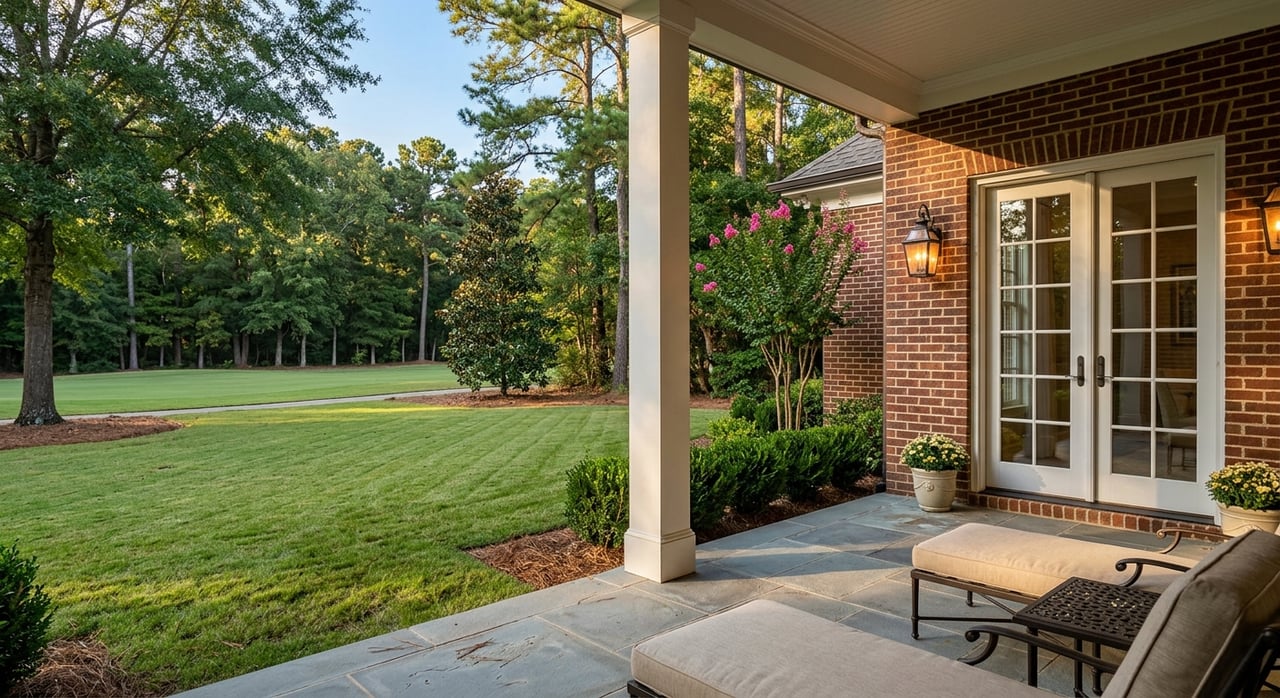
One of the biggest draws of golf-course communities is the setting. In North Raleigh, that usually means mature landscaping, winding streets, and homes placed to take advantage of open views and rolling terrain.
North Ridge feels established and mature
North Ridge has a legacy feel that many buyers want in North Raleigh. The club says its original 18 holes opened in 1968, and the community grew alongside the club over time. That history tends to translate into mature trees, an established streetscape, and a neighborhood character that feels layered rather than newly built.
Wakefield Plantation feels varied and planned
Wakefield Plantation has a broader residential mix than some golf-course neighborhoods. Because it includes townhomes, villas, and custom homes, the overall feel is more varied and master-planned. For some buyers, that means more choices in layout, price point, and maintenance style.
Wildwood Green feels close to the course
Wildwood Green is especially centered on fairway living. The homes date to the mid-1980s, and the community describes large, rolling lots with earth-tone aesthetics. If you picture homes that feel visibly connected to the course, this is the clearest example in North Raleigh.
Daily life is about more than golf
A common misconception is that living on a golf course is only about playing golf. In North Raleigh, the lifestyle is often just as much about social events, recreation, and organized amenities as it is about tee times.
At North Ridge, residents have access to a wide mix of club programming. Amenities include 11 tennis courts, 6 pickleball courts, a resort-style pool with water slides, a fitness center with more than 40 group classes per week, youth camps, enrichment classes, swim-team activity, and dining events such as holiday celebrations and special dinners overlooking the course.
Wakefield Plantation also supports an active club routine. Amenities include aquatics, tennis and pickleball, a renovated clubhouse, a kids club, themed camps, a teen room, and multiple dining options. Social programming there includes live music and comedy, which adds to the sense that the club functions as a regular part of daily life.
Wildwood Green combines golf with a strong neighborhood social calendar. In addition to a pool, tennis and pickleball courts, cabana access, and golf facilities, the community features more than 100 golf and social events. Activities like book club, movie night, mahjong, poker, and wine night show that the lifestyle can be social even for residents who are not avid golfers.
The lifestyle is active and organized
For many buyers, the biggest benefit of golf-course living is not the sport itself. It is the convenience of having recreation, events, and shared spaces built into your neighborhood.
That can be a strong fit if you want:
- A neighborhood with a clear identity
- Easy access to organized activities
- Social opportunities close to home
- Multiple ways to stay active beyond golf
- A setting that feels open and landscaped
This kind of environment may be especially appealing if you enjoy having amenities nearby and like the idea of a built-in social calendar. It can also be helpful for relocators who want a community with visible activity and a clear sense of place.
What to know about pace and privacy
Golf-course communities often feel open and scenic, but they are not always quiet in the same way a low-amenity subdivision might be. In North Raleigh, these neighborhoods tend to function more like suburban club communities than resort hideaways.
That means you may see regular movement tied to club events, swim activity, dining, tennis, pickleball, or golf operations. If you enjoy an active neighborhood atmosphere, that can be a plus. If you prefer a very low-program, low-traffic setting, it is worth paying close attention to the daily rhythm before you buy.
Shared-space etiquette is also part of the experience. Wildwood Green, for example, reminds residents not to walk on the course during operating hours. That kind of guidance reflects an important reality of golf-course living: the views are beautiful, but the course is still an active recreational space with rules.
You are not cut off from city conveniences
Another advantage of North Raleigh golf-course living is that it is not isolated. You can have a neighborhood built around recreation and still stay close to shopping, dining, and everyday services.
North Hills is a nearby mixed-use district that offers a wide mix of conveniences. According to the district, you can find groceries, banks, a pharmacy, a 60,000-square-foot gym, a 14-screen cinema, an upscale bowling alley, tap rooms, boutiques, department stores, and cafés. That adds practical convenience to a lifestyle that might otherwise sound more removed.
You also have easy access to outdoor space beyond the course. Durant Nature Preserve offers lakes and fishing, bird and butterfly gardens, a sensory and nature play garden, and picnic areas. Falls Lake State Recreation Area adds hiking, biking, paddling, swimming, fishing, and picnicking across several access areas.
Who this lifestyle fits best
Golf-course living in North Raleigh tends to work best for buyers who want more than just a home. It often suits people looking for a neighborhood experience shaped by amenities, recreation, and a shared social framework.
You may find it a good fit if you want a home where the setting plays a meaningful role in daily life. Open views, landscaped streets, and club-centered routines can create a lifestyle that feels distinct from a standard subdivision.
It may also suit you if you are relocating and want a neighborhood with visible structure and community activity. When you are learning a new area, it can be helpful to move into a place where amenities, gathering spaces, and neighborhood patterns are easy to understand.
On the other hand, if your top priority is minimal activity and very little shared programming, a golf-course neighborhood may not be the best match. The right fit comes down to how you want your home and neighborhood to function together.
Why local guidance matters
Not all golf-course homes live the same way, even within the same part of North Raleigh. Lot placement, orientation, proximity to fairways, and access to amenities can all affect how a property feels day to day.
That is why neighborhood-specific guidance matters when you are buying or selling in communities like North Ridge, Wakefield Plantation, or Wildwood Green. A home with a golf view may offer beauty and openness, but the best fit also depends on how you use outdoor space, how much activity you want nearby, and what kind of neighborhood rhythm feels right for you.
If you are exploring North Raleigh golf-course living, working with someone who understands these community differences can make the search much more focused. For personalized guidance on North Raleigh country-club and golf-course homes, connect with Bobbie M Callahan.
FAQs
What is golf-course living like in North Raleigh?
- Golf-course living in North Raleigh usually means a suburban neighborhood with golf views, organized amenities, social events, and convenient access to shopping, dining, and outdoor recreation.
Which North Raleigh neighborhoods offer golf-course homes?
- Well-known North Raleigh golf-course communities include North Ridge, Wakefield Plantation, and Wildwood Green, each with a different neighborhood scale and housing mix.
Is North Raleigh golf-course living only for golfers?
- No. These communities often include pools, tennis, pickleball, fitness amenities, dining, camps, and social events, so the lifestyle can appeal to residents who are not focused on golf.
What makes North Ridge different from other golf-course communities in North Raleigh?
- North Ridge stands out for its long-established history, mature neighborhood feel, 36 holes, nearly 400 acres, and broad amenity lineup tied to the club.
What should buyers know before choosing a North Raleigh golf-course home?
- Buyers should consider the neighborhood’s activity level, club-centered routines, shared-space rules, housing style, and how close a specific home sits to golf and amenity areas.