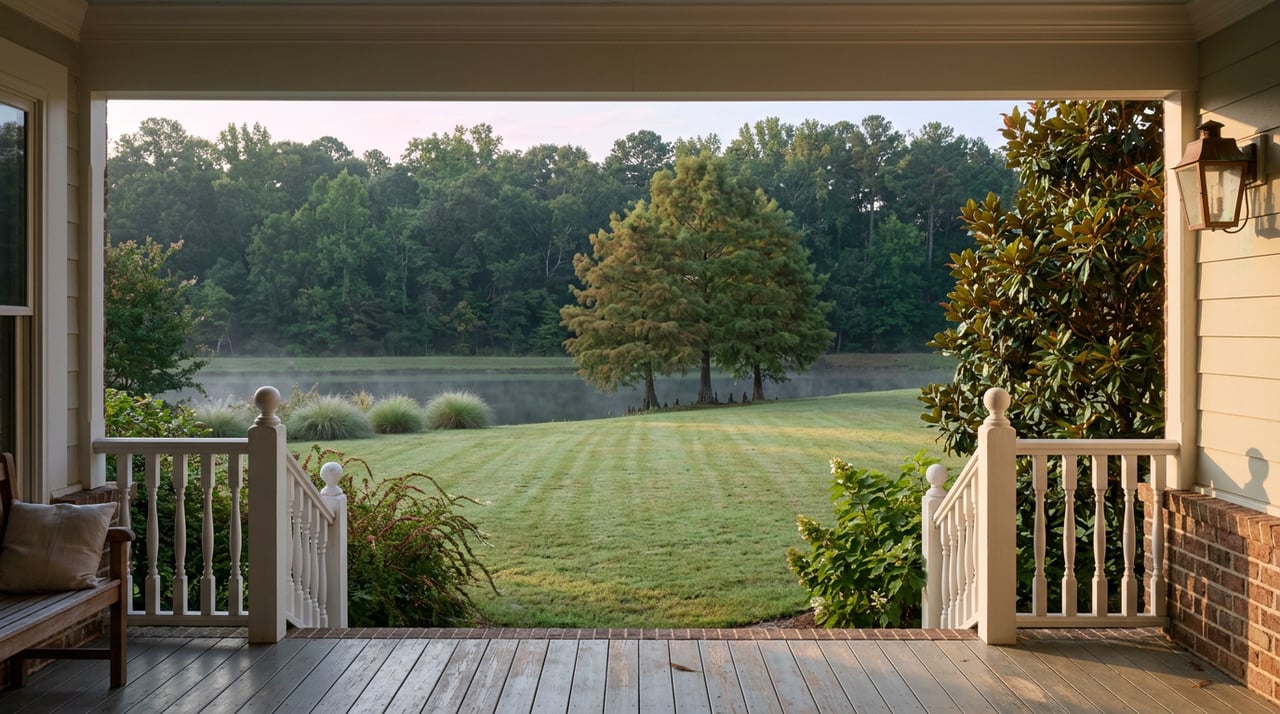
Regulars on the Shelley Lake trail know the rhythm without thinking about it. Park at Sertoma, cross the dam side, loop the lake, maybe duck into a gallery show on the way back to the car. That rhythm broke on June 22, 2026, when the Sertoma Arts Center closed its doors for a construction project that won't wrap until September 2027. For the first fall since a pair of bald eagles moved into the park at the end of 2017, the building that anchors the west side of the loop won't be part of the walk at all.
That timing matters more than it looks like on paper. Fall is exactly when Shelley Lake's wildlife gets busiest, not quieter. The same weeks the arts center goes dark for renovation are the weeks the eagles and the park's great blue heron colony start rebuilding their nests for the season. One side of the 2.1-mile paved loop is shutting down. The other is about to get more interesting. If you walk this trail regularly, the two halves of the park are no longer offering the same experience, and knowing which one you're headed for changes how you should plan the visit.
Two Lots, Two Very Different Falls
Shelley Lake Park sits on West Millbrook Road with two separate parking areas, about half a mile apart. The main lot, at 1400 W. Millbrook Road, puts you on the west side of the lake, right next to the Sertoma Arts Center. The second lot, at 1140 W. Millbrook, drops you on the east side. For most of the park's history that distinction hasn't mattered much. Both sides connect to the same loop. Now it does.
The west entrance is where the arts center's construction fencing lives for the next year-plus. The building's restrooms, its rotating gallery spaces, and its ceramics and painting studios are all inside a structure that's currently a job site. The east entrance, by contrast, is where the eagles' nest sits, close enough to the trail that the city posts a sign warning visitors they're near an active nest. The heron rookery is technically on the west side, but it's tall enough in the trees that you can see it from the east-side trail looking back across the water, so that piece of the wildlife show isn't going anywhere.
In practice, that means the west side is losing its reason to linger while keeping some of its scenery, and the east side, historically the quieter half of the loop, is becoming the fuller experience: nest, rookery, and no construction noise.
What's Actually Happening at Sertoma
The renovation is not a cosmetic refresh. The current Sertoma Arts Center building is a three-story, 12,011-square-foot structure, and the project underway adds another 7,710 square feet, an addition equal to roughly two-thirds of what's already there. The plan includes a new gallery, a new ceramics studio, an elevator, and improved accessibility throughout, funded through the city's 2022 Parks Bond. It's a meaningful expansion, not a paint job, which is part of why the closure runs 15 months instead of a few weeks.
The last exhibition to hang in the Raleigh Room before the doors closed was Adam Cooley's "Boro Land: Layered Worlds," on view through June 21, one day before construction began. Classes haven't stopped, but they've moved. Programming resumes this September at alternate sites including Laurel Hills Community Center, where instructor Michelle Davis Petelinz picks up a toddler art class running Tuesdays from September 15 through October 20. The full list of relocated fall classes is in the city's Fall 2026 Leisure Ledger, already published.
Here's what that shift looks like for someone who's used the west side of the park as their default:
| At the Sertoma entrance | Before June 22, 2026 | Now through September 2027 |
|---|---|---|
| Building access | Open for classes, exhibits, studio time | Closed, active construction site |
| Restrooms | Inside the building | Unavailable on site |
| Gallery shows | Rotated every two months across three spaces | Paused until reopening |
| Arts classes | Held on site | Held at Laurel Hills Community Center and other alternate locations |
If a restroom stop has always been part of your loop, that piece of the routine is gone for now.
The Birds Don't Know the Building Is Closed
None of this touches the park's wildlife calendar, which is arguably the bigger story this season anyway. The bald eagle pair at Shelley Lake has nested here every year since the end of 2017. Sean Gough, the city's Land Stewardship Program Manager, told WRAL this spring that 2026 marked their ninth consecutive year at the park, and that the pattern repeats on a predictable clock.
"They typically show up in the October-November timeframe."
That's Gough describing when the eagles reappear each fall to start the nesting cycle over again, which means the same weeks the arts building sits behind construction fencing are the weeks these two return to fortify their nest for another season. A local Facebook group called Shelley Lake Park Fans gave the pair names years ago: Raleigh for the male, Shelley for the female. This year's nest produced a single eaglet, hatched in March, a lighter clutch than the pair's usual two, but it's now old enough to be visible from the trail if you know where to look.
The eagles aren't the only ones building. Shelley Lake also hosts a great blue heron rookery, a colony of stick nests built high in the trees on the west side, some of them up to four feet wide. According to WALTER magazine's reporting on the park's wildlife, both the eagles and the herons begin building or reinforcing their nests in the fall, which is the best window all year to bring binoculars and actually see the activity rather than just hear it.
If You Walk the Loop This Season
A few practical notes for anyone planning a fall visit:
- Restrooms are off the table on the west side. If you need a bathroom stop mid-walk, plan around it rather than assuming Sertoma will be open.
- The eagle nest is visible from the east-side trail, accessed most directly from the 1140 W. Millbrook Road lot. Look for the posted sign marking the active nest zone.
- The heron rookery is on the west side but visible across the water from the east trail, so you don't have to walk past the construction to see it.
- Fishing is still limited to the Shelley Lake Pier, with a valid license and live bait only. No personal watercraft on the lake.
- For a longer walk that skips the construction entirely, the Mine Creek Trail and Snelling Branch Trail both branch off the main loop, with Snelling Branch heading toward North Hills Drive and Optimist Park if you've parked on that end.
A Park That's Used to Rebuilding Itself
There's a small detail in the arts center's renovation plan worth knowing even if you never take a class there. Sculptor Jim Gallucci, selected for the project in 2024, is building a public art installation inspired by a ginkgo tree on the site, using leaf castings made during community workshops in 2025. Ginkgoes are famous for outlasting almost everything around them. It's a fitting image for a park that's spent the better part of a decade quietly managing its own resilience story, from installing a safety platform near the eagles' nest after early eaglets fell, to now expanding a 12,000-square-foot building without shutting down the loop that thousands of people walk every year.
The west side will look different for a while. The east side, if anything, gets more worth the walk. Either way, the park keeps functioning, just not as one uniform loop until the fences come down.
If you already call this part of North Raleigh home and want to talk about what's happening beyond the trail, from what's selling nearby to what's changing in the neighborhood around it, Bobbie Callahan is always glad to compare notes. And if the conversation ever turns toward buying, selling, or just understanding your home's place in this market, you can request a personalized market plan whenever the timing feels right.